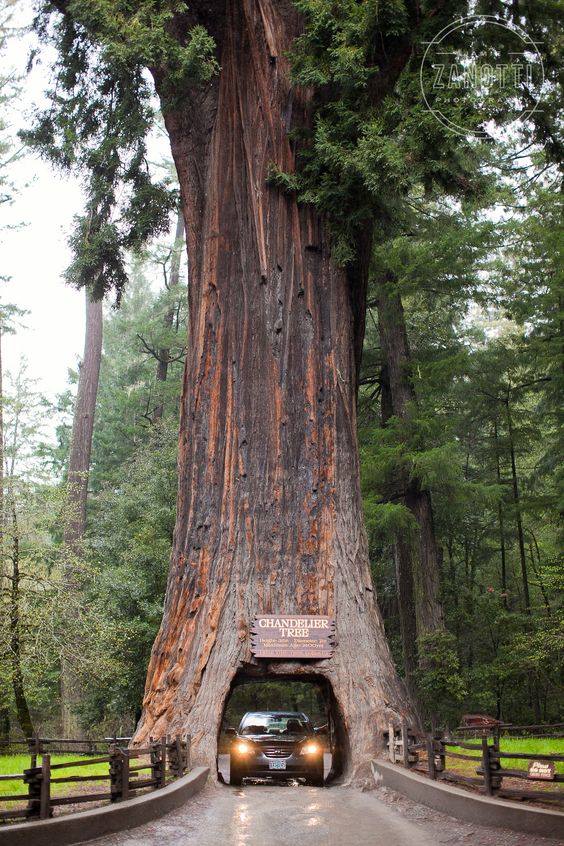
Visit any random place on Google Street View and you find the common denominator of every place on Earth to be: Trees! If one alien asks another “What’s Earth about?” they say: “It’s about Trees!”.
An AI query on “the most amazing facts about trees” tells me “trees are mostly dead”. This understanding, reflecting “modern science” is detached from reality. The query will not tell you that trees are sentient, can be used for wireless communication, make you smarter, heal you, are psychic, can walk when you’re not looking and have consciousness.
This article presents 9 things neither you nor AI knew about trees.
1
Trees make you smarter
Kids who grow up around trees are smarter. From an article in “Science Alert”, July 24, 2021:
“A long term study among 3568 students in London, between the ages of 9 and 15, has found those kids who spent more time near woodlands showed improved cognitive performance and mental health in adolescence”.

It’s always been said that living in the city makes it easier to “get a job and prosper”, but in the age of automation and internet, that no longer applies (if it ever did). There are many reasons to prefer country living over an urban lifestyle and this is one of them.
.
2
Trees are Antennas
.
The following was published in the July 1919 issue of “Electrical Experimenter”.
I’ve pictured the entire article below. If it’s a too long of a read for you, here’s a summary:
Metallic nails are driven into the roots of a tree and connected to radio equipment, which dramatically improved the signal! Subsequently, the U.S. Military used trees as antennas. In World War I, the method was used for spying on German radio communication. Using trees enabled portable radio communication. Trees were also successfully used to receive radio signals from Europe. Trees were used to intercept enemy transmissions.
A floraphone was the name given to a tree-based telephone system. Floragraph was the name for a tree-based telegraph system. The system was more efficient, requiring lower power than conventional means.
What became of this? It’s said that it “never became mainstream technology”, due to “being outpaced by conventional antennas”.
If that’s true, why was it used by the military much later, such as in the Vietnam war? I have a guess: Because the military decided to take advantage of it’s benefits and secret from enemies and so it was withheld from the public.
If trees can boost radio signals, they must have the capacity to communicate. Which brings us to this next item.
.
Trees talk to each other
.
Physicist Ed Wagner says he has found evidence that trees talk to each other in a language he calls W-waves.
“If you chop into a tree, you can see that adjacent trees put out an electrical pulse,” said Wagner. “This indicates they communicate directly.”Explaining the phenomenon, Wagner pointed to a blip on a strip-chart recording of the electrical pulse.
“It put out a tremendous cry of alarm,” he said. “The adjacent trees put out smaller ones.”
An abstract of his research was published last fall in Northwest Science magazine, put out by the Northwest Scientific Association at Washington State University in Pullman, Wash.
“People have known there was communication between trees for several years, but they’ve explained it by the chemicals trees produce,” Wagner said.
“But I think the real communication is much quicker and more dramatic than that,” he said. “These trees `know’ within a few seconds what is happening. This is an automatic response.”
Wagner has measured the speed of W-waves at about 3 feet per second through trees and about 15 feet per second through the air.
“They travel much too slowly for electrical waves,” he said. “They seem to be an altogether different entity. That’s what makes them so intriguing. They don’t seem to be electromagnetic waves at all.”
Wagner said he stumbled across the W-waves early last year while doing research on sap flow in trees.
Apart from electromagnetic communication, it is known that trees communicate and share resources with each other through an underground fungal network connecting the different trees and plants. Through fungal threads, trees send sugars, nitrogen, phosphorous and apparently, chemical warnings about various threats such as pests or drought. Stronger trees have been shown to support younger ones by sending them nutrients through this network, just like a a mother feeds her children.
4
Trees Heal
Energy-Healing in the year 1784: People gather around an old elm tree. The trees “emanations” are distributed to the people via cords. The cords are wrapped around the diseased or hurting body part. The participants sit on stone circles and form a chain by holding each other’s thumbs causing “the magnetic fluid to circulate”. By the touch of hands and an iron rod, the facilitator singles out someone to put into a state of trance. Once in a state of trance, the hypnotized acts as physician by placing their hand on or near diseased body parts of their neighbors and, in the trance-state, declaring the problem and the cure. Strange? Sure. Effective? I don’t know, I’ve never tried. But it’s conceivable that the energy of the tree, and the group-energy, generated through the holding of hands and states of hypnotic trance, could facilitate healing.
I’ve just summarized the pages from this antique book pictured below, if you wish to skip reading it all.
A Harvard study has demonstrated that trees boost the immune system via “phytoncides”, which are airborne chemicals from pines and other conifers. This virus and tumor-fighting effect was shown to last for over a month. Being near trees has also been shown to lower cortisol levels (stress levels), to lower blood pressure and heart-rate, improving air quality via ozone and nitrogen oxide. Willow bark contains salicin, which is the basis for aspirin, a pain-soother. Bark and pine extracts are used as anti-inflammatory creams for skin issues. Trees cool environments, protecting from excessive heat. This is why areas with less trees become deserts.
This all amounts to good mood and good health. Trees are good for you!
5
.
Trees can walk
.
“I see people; they look like trees walking around” Mark 8:24
This one is a little out-there. There’s little solid evidence for it, but plenty of folktales, mythology and urban legend. Even so, if people talk about it across cultures and countries, it can’t be ruled out. The indigenous people of Peru and Ecuador tell of the walking palm tree (socratea exorrhiza – where to scientists come up with this ugly vocabulary?). The tree is said to move out of the way of falling debris or closer to sunlight, while no one is watching.

As you can see, it’s roots are above ground. These are said to act as legs that can move up to 3 centimeters a day or 20 meters a year. Botanists have confirmed as much, but debunkers claim that, rather than walking, the tree simply grows in a new direction.
These same debunkers go silent when you talk about the “creeping devil cactus”, which is capable of walking across the desert. The plant is mainly found in Baja California, Mexico.
In the mythology of “ancient Greece” it is said that trees have the ability to uproot themselves and move in the forest to defend it or escape harm. The same is said in celtic folklore. In English folk tales, willows are said to uproot themselves at night and stalk travelers.
The baobab trees of Africa are claimed to be walking trees by the locals. Ancient Islamic tradition (Hadith) says that Prophet Mohammed commanded a tree to walk and also references speaking trees.
My verdict: Maybe worth exploring, maybe not.
.
6
.
Trees listen to you
.
Research on “Biocommunication with Plants” has established that plants are sentient, they know pain and pleasure.
I once decided two trees at the back of our house to be cut down. I was told they were a “hazard”. “Next storm these trees will crash into your roof”. We had hired a company to chop these huge, beautiful, ancient trees. One day before they arrived, I got a bad feeling about the whole thing. I went out to the trees, touched them. I said “I’m not going to have you killed. You provide shade. You provide oxygen. You provide life to birds and squirrels. I’m grateful you’re here”. I cancelled the tree-cutters.
Soon thereafter, the “storm of the century” arrived. I live in some elevation and we had tree-bending wind-surges, known in the news as “Hurricane Helene. Trees in my street did crush houses. But not mine. Was it because I had a chat with them?
The same happened years ago, with a property I owned in Florida. Hurricane Ian, one of the worst in History, destroyed several houses beside mine, but the one I owned remained untouched. I’m inclined to believe that “if you’re nice to nature, nature is nice to you”.
.
7
.
Trees can be used for remote viewing
.
Trees have been around longer than you. They’ve been witness. Every year their leaves die, but the tree remains to grow new leaves next season. Likewise, a body of a human dies, while the soul remains. This is the way of the cosmos. The temporary passes away, the essence stays. There are still trees around said to be 4000 years old. Even when they seem to be dead, their roots continue underground and can generate a new tree. They could theoretically live forever. Roots are even more essence than the trunk and branches.
There is a function of trees nobody knows about: To store what they’ve witnessed. Close your eyes, touch the tree and ask it to retrieve what it witnessed at its location at specific dates. Ask firmly and verbally and then relax deeply. Or ask what it knows about any topic. Ask firmly and verbally and then relax deeply. Mental imagery will come up and you’ll know that trees communicate with you telepathically.
8
.
Trees have consciousness
.
Through processes yet unknown, scientists say trees “remember” past environmental conditions and adapt their behavior to it, to be better prepared the next time it happens. Trees exposed to droughts learn to close their leaf pores more quickly to conserve water, for example. This points at intelligence or consciousness, even though they are not known to have a brain or nervous system.
Some trees practice “crown shyness,” deliberately avoiding touch with their neighbors to create puzzle-like canopy gaps.
In certain species (like some eucalypts or pines), branches stop growing or retract when they sense nearby trees—possibly via mechanical touch, light, or chemical cues. This prevents branch damage from wind and may limit pest spread. From below, the canopy looks like a deliberate, polite mosaic of empty space.
.
9
.
Trees Shapeshift
.
A few houses down my street, there’s a house where the trees grow slightly away from the house. This neighbor has the same trees I do, but mine don’t grow away from the house, they grow straight. It’s as if the trees witnessed something in the house and wanted to get away from it.
The shape of trees and their path of growth is no coincidence. They grow in response to environmental, and in my opinion, spiritual events.
Trees in Nowe Czarnowo, Poland:
What accounts for this strange manner of growing? Other trees of similar material, don’t behave this way.
Trees in Tantsuyushchiy les, Russia:
Why does a tree choose to grow in a spiral while its counterparts don’t? Are these forms sculpted by energy invisible to the eye?
I’ve read that these pine trees are “misshapen due to climate change”. That ignores the fact that other pine trees in the same areas aren’t misshapen. “Climate change” is the explanation simpletons give to what they can’t explain.
Trees are providers of life to birds, squirrels and other animals. They give you oxygen and shade. But there’s more. We haven’t even scratched the surface of our reality yet.
If you benefited from this article, share it far and wide